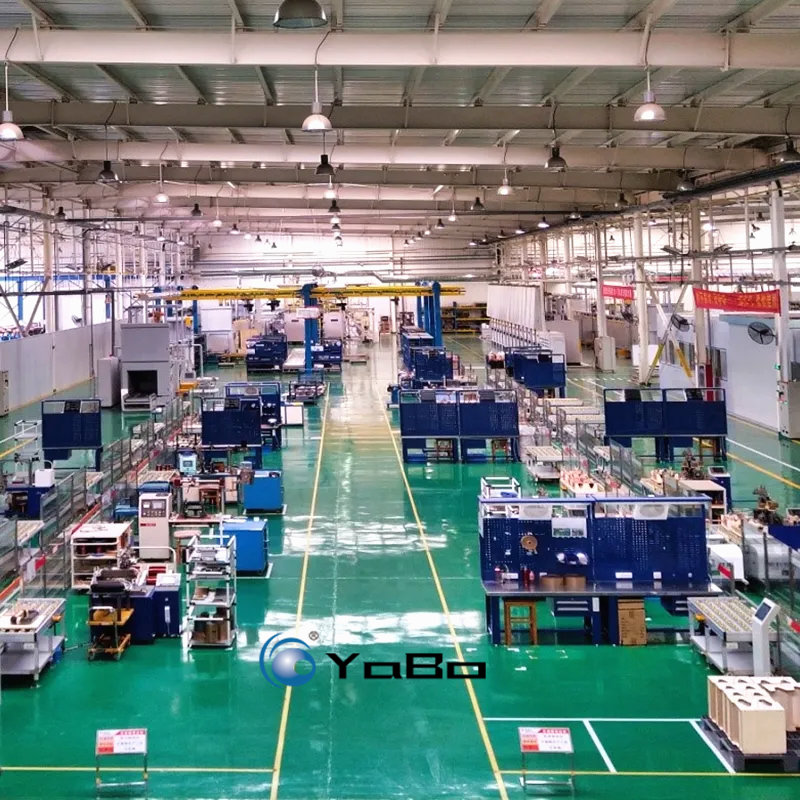
1. Production Process Planning
1.1 Core Process Breakdown
- Five major stages: component procurement and inspection → PCB soldering → assembly → testing → packaging.
- PCB soldering is the core process of the inverter assembly line, requiring solder joints to meet both electrical performance and mechanical strength standards.
1.2 Standardized Implementation
- Shorten production cycles by establishing process technical indicators (e.g., soldering temperature profiles) and standardized operating procedures.
- Application cases show that reasonable process arrangements can improve efficiency by 15%–20%.
2. Equipment Selection and Line Layout
2.1 Key Equipment List
| Equipment Category | Function | Impact on Quality |
|---|---|---|
| Automated Soldering Machine | Core equipment for PCB soldering | Improves soldering consistency |
| Testing Equipment | Functional and performance verification | Ensures outgoing quality |
| Assembly Robots | Performs precision assembly | Reduces human-induced variations |
| Typical Data: Increased automation reduces quality fluctuations caused by manual operations, resulting in 8%–12% yield improvement. |
2.2 Layout Principles
- U-shaped layout according to process flow, with soldering and testing equipment placed adjacently.
- Result: material handling time reduced by 30%, effectively eliminating production bottlenecks.
3. Personnel Training and Management
3.1 Training System
- Three training modules:
- Process theory (e.g., IPC soldering standards)
- Equipment operation (e.g., robot programming)
- Emergency response
- Requirement: quarterly assessment pass rate ≥95%.
3.2 Management Mechanism
- Implement lean production kanban management.
- Align KPI assessments (e.g., daily production capacity compliance rate) with performance bonuses.
- Case result: per capita output increased by 22%.
4. Quality Control
4.1 Full-Process Monitoring
- From component inspection (e.g., MOSFET on-resistance test) to finished product aging test (85°C/85%RH, 48 hours).
- A total of 12 quality monitoring points are set up along the production line.
4.2 Problem Traceability
- Use MES to record soldering parameters (temperature ±3°C), assembly torque (5N·m ±0.2), and other data.
- Achieve full traceability of quality issues within 2 hours.
5. Production Logistics Management
5.1 Material Scheduling
- Achieve JIT material feeding via electronic kanban.
- Safety stock is set at 8 hours of consumption.
- After implementation, material waiting time reduced by 40% on one production line.
5.2 Route Optimization
- Use AGV carts to transport heavy components (e.g., heat sinks) on the inverter assembly line.
- Circulation time shortened from 15 minutes to 6 minutes.
6. Information System Integration
6.1 ERP–MES Integration
- ERP automatic production scheduling accuracy reaches 98%.
- MES collects 300+ parameters in real time, such as equipment OEE (target ≥85%) and test pass rate (standard ≥99.2%).
6.2 Data Application
- Based on production big data analysis (e.g., soldering defect heatmaps), the rework rate for a certain product model was reduced from 1.5% to 0.3%.
7. Continuous Improvement and Optimization
7.1 Improvement Tools
- Conduct monthly value stream mapping analysis for the inverter assembly line.
- Implement 5S management to reduce non-value-added time (e.g., tool search time in one workshop shortened by 70%).
7.2 Technological Iteration
- Evaluate new equipment (e.g., 3D AOI detectors) annually.
- After a technology upgrade, production line changeover time was reduced from 4 hours to 1.5 hours.