

I. Product Overview
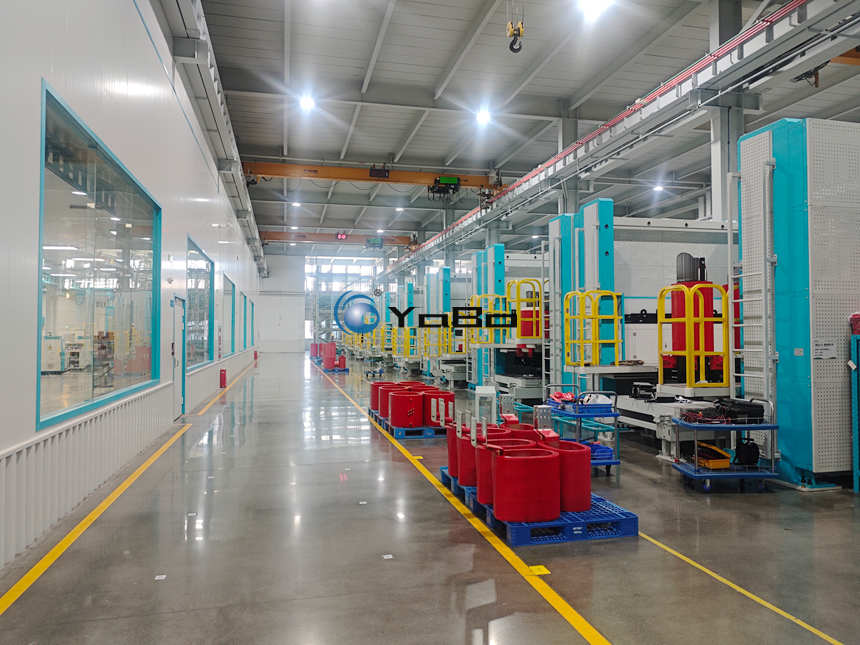
This dry-type transformer assembly line is designed for the manufacturing of high-voltage coils for 10kV, 35kV, and select 110kV resin-cast dry-type transformers. It encompasses four key process stages: coil molding, vacuum casting, high-temperature curing, and demolding/transfer. The entire line adopts a modular unit configuration, allowing for non-standard customization based on workshop column grid dimensions, product voltage ratings, and production takt time. It is suitable for both greenfield dry-type transformer factory planning and automation retrofits of existing casting and curing workshops.
Epoxy resin vacuum pressure casting is the core process for forming the insulation of dry-type transformer coils. After being placed in molds, the coils are evacuated; degassed epoxy resin mixture is then injected, followed by high-temperature curing to form the solid insulation body. This process directly determines the partial discharge level and dielectric strength of the final product. This assembly line transitions the process from standalone manual operation to continuous automated production, thereby minimizing quality variability caused by manual intervention.
II. Applicable Processes and Product Range
The line utilizes an epoxy resin vacuum pressure casting process. The production workflow is as follows: Inspected wound coils are loaded into dedicated molds; the molds are transferred to a preheating oven for dehumidification; after preheating, they enter the vacuum casting tank where resin and hardener—prepared via film degassing and metered mixing—are injected into the mold under vacuum; post-casting, the molds are transferred to curing ovens to complete curing according to a specific temperature-time profile; after cooling, the coils are demolded and proceed to post-processing and inspection.
Applicable Products:
- Dry-type distribution transformers (SCB series epoxy resin cast dry-type transformers)
- Rectifier transformer and traction transformer coils
- Dry-type reactors and arc suppression coils
- Special dry-type transformers (excitation transformers, grounding transformers, etc.)
III. Main Line Components
-
Molding and Pre-treatment Zone
Equipped with KBK flexible overhead cranes covering the molding station, material preparation area, and RGV transfer points. Aluminum alloy tracks are laid out along the workshop column grid, allowing for adjustable routing. Cranes, fitted with specialized lifting fixtures, handle coil loading, mold clamping, and mold transport. Dedicated tooling racks support the molds, enabling seamless flow between stations. -
Vacuum Casting Unit
Comprises resin/hardener preparation tanks, a film degassing system, metering pumps, a final mixing tank, and a casting tank. Mixing ratios are PLC-controlled, with switching capability between vacuum and positive pressure modes for mixing and casting. The casting tank features a quick-opening door mechanism that docks precisely with the RGV transfer platform. The system supports storage of multiple process recipes to accommodate different resin systems. -
Curing Oven Cluster
Utilizes electric heating with hot air circulation. Each oven is equipped with multi-point temperature sensors and PLC-based segmented temperature control. Step-heating profiles can be executed according to product specifications and resin formulations. The oven cluster allows parallel operation of different curing curves, supporting simultaneous multi-product production. -
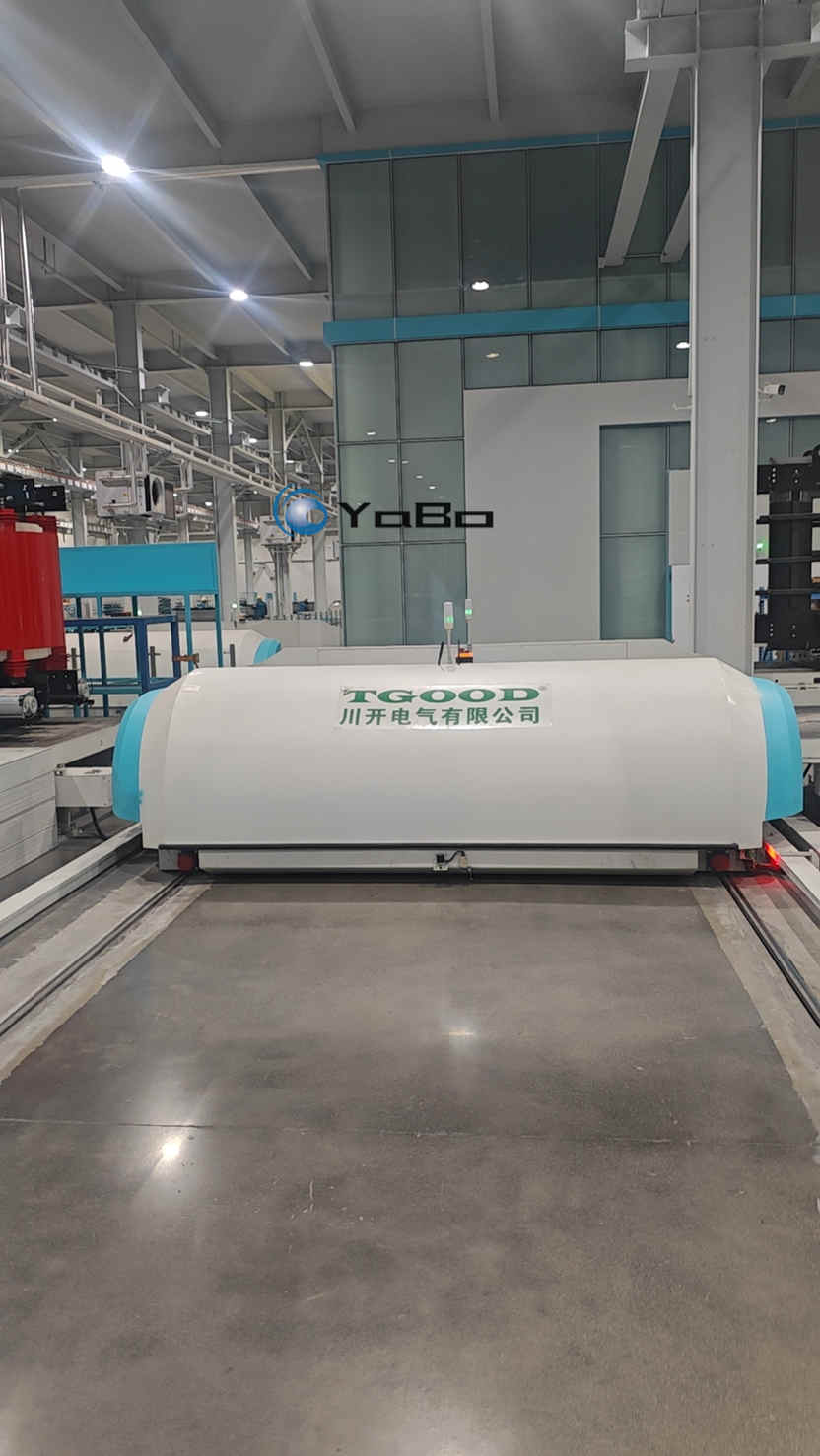
RGV Rail-Guided Logistics System
Bidirectional rail-guided vehicles (RGVs) running on floor-embedded linear tracks deliver mold-loaded tooling racks to casting stations and curing ovens according to the production takt. The rail guidance ensures millimeter-level repeatability in positioning. Vehicles are synchronized with the master PLC and operate automatically based on production schedules. -
Information Interface
Reserved Industrial Ethernet communication interfaces enable integration with factory MES systems, facilitating process parameter acquisition, tooling traceability, equipment status monitoring, and production report generation.
IV. Technical Specifications (Customizable)
Note: All parameters listed above are reference values. All items are subject to non-standard custom design based on actual customer requirements.
V. Key Points for Non-Standard Customization
This assembly line has no fixed standard specifications:
- Facility Adaptation: KBK track span, RGV track length/routing, and equipment foundation loads are designed according to the customer’s facility conditions.
- Product Adaptation: Tooling rack dimensions, crane rated load, and casting tank/curing oven volumes are customized according to coil diameter, voltage rating, and single-mold weight.
- Capacity Adaptation: Throughput is matched by adding/removing parallel stations, adjusting RGV takt time, or increasing buffer zones.
- Operation Mode: Supports combined configuration of manual, semi-automatic, and fully automatic modes.
VI. Process Quality Control
- Enclosed, automated vacuum casting process minimizes the introduction of air bubbles and impurities.
- Multi-point temperature control and segmented curing curves prevent coil deformation caused by thermal stress.
- Standardized tooling rack handling reduces mold damage and repositioning errors.
- Automatic recording of process parameters enables full quality traceability.
VII. Value Proposition
By coordinating KBK cranes and RGVs, this assembly line integrates molding, casting, curing, and demolding into a continuous takt flow, reducing manual transfer and inter-process waiting times. Enclosed automated handling minimizes operational variability, ensuring consistent coil casting quality. It is ideally suited for both new dry-type transformer manufacturing facilities and automation upgrades of traditional workshops.