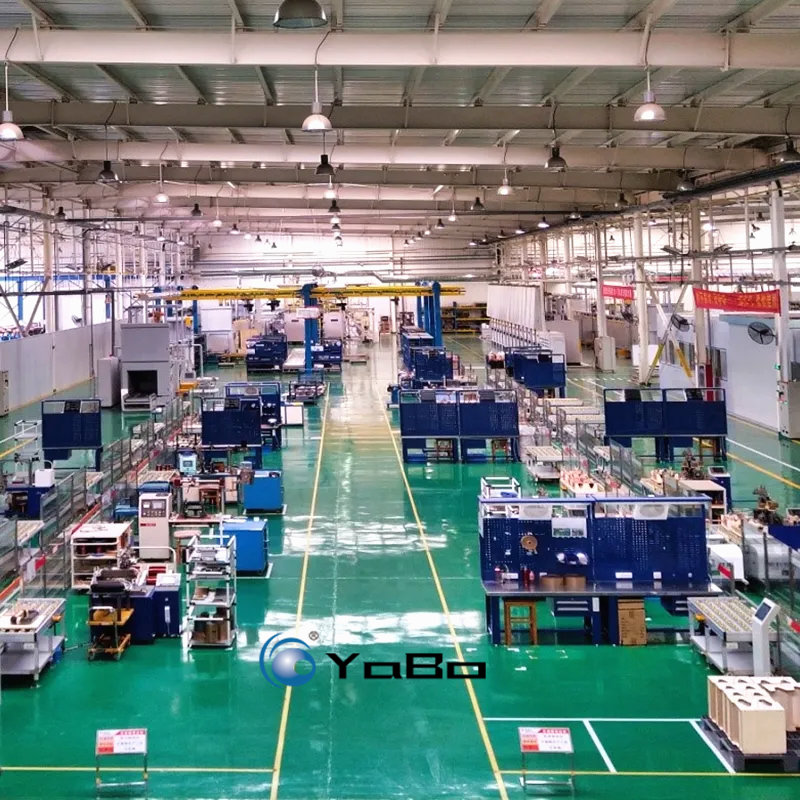

Solar and energy storage inverters are core power conversion equipment for new energy systems, covering residential micro-inverters, string inverters, commercial and industrial central inverters, as well as hybrid energy storage inverters with power ranges from 1kW to 250kW. Our inverter assembly line production system adopts a modular segmented design, fully customized for standardized and mixed-batch mass production of different power electronic inverters. The whole production system uses conveyor fixed stations or AGV flexible material handling to connect all process links, covering PCB processing, power module assembly, cabinet assembly, electrical performance testing and finished product packaging. It matches semi-automatic and manual collaborative assembly modes to meet mass production and customized small-batch production demands for global new energy manufacturers.
1. Core Production Process of Inverter Assembly Line
1.1 High-Speed SMT Surface Mount Assembly
This process is used for precision mounting of control boards and drive board SMD components. High-precision placement equipment completes the positioning and mounting of resistors, capacitors, main control chips and auxiliary semiconductor devices. After reflow soldering, the AOI automatic optical inspection system checks for offset components, cold solder joints and solder bridging problems in real time. This procedure ensures the stability of the inverter’s signal control circuit and lays a reliable foundation for subsequent assembly.
1.2 DIP Through-Hole Plug-in & Wave Soldering
For large components that cannot be surface-mounted, including electrolytic capacitors, power relays, high-current terminals and inductors, we adopt standard through-hole plug-in processing. After plug-in completion, PCBs enter the wave soldering equipment. The molten tin flow forms standardized solder joints, which not only meet the electrical conduction requirements of high-current circuits but also ensure the mechanical stability of component connection, avoiding loose soldering failure during long-term operation of the inverter.
1.3 Power Module Integration Assembly
The IGBT power module is the key component for inverter DC-AC power conversion. In the inverter assembly line, modules are fixed and crimped on the power output area of the main PCB, and closely fitted with the heat sink structure. Thermally conductive silicone grease is evenly applied on the fitting surface to reduce thermal resistance. This standardized assembly process effectively solves the overheating and power attenuation problems of high-power inverters under long-term full-load operation and improves equipment operational reliability.
1.4 Control Circuit Assembly & Pre-Debugging
Assemble the welded PCBA with structural accessories such as capacitor brackets and sensor fixing seats to complete the preliminary assembly of the control circuit. Professional programming tooling is used to burn the firmware into the main control chip, and basic communication and sampling circuit tests are carried out in advance. Abnormal data and circuit faults are eliminated at the front-end process to reduce rework rate in the later full machine assembly stage.
1.5 Cabinet Final Assembly & Internal Wiring
The inverter cabinet shell processed by laser cutting, bending and surface spraying is fed into the assembly station. Workers and auxiliary handling equipment complete the installation of PCBA components and power modules inside the cabinet. All high-power wiring harnesses, signal lines and grounding wires are constructed in accordance with standard torque and wiring specifications. For heavy-duty commercial and energy storage inverters, the station is equipped with auxiliary lifting equipment and height-adjustable tooling to optimize assembly ergonomics and ensure consistent assembly quality.
1.6 Full Power Test, Aging Verification & Finished Product Packaging
After assembly, all inverters are sent to a professional test bench for full-load power test, insulation performance detection and protection function verification. Continuous aging tests are conducted to screen out potential hidden faults. Products that pass all performance indicators will enter the offline packaging process and be stored in the warehouse for delivery.
2. Workshop Configuration & System Operation Features
The on-site inverter assembly line production system adopts a modular station layout, matched with standardized conveying channels and material storage racks. The whole workshop is connected with the factory MES system. The on-site HMI touch screen can view real-time production output, station yield, beat time and equipment operation faults, realizing full-process traceability of product production data.
The workshop is equipped with ESD anti-static workbenches, safety guardrails and tri-color warning lights, which meet the production safety standards of power electronic equipment. According to customer product specifications, the line can be switched between belt conveyor continuous production mode and AGV discrete station production mode, adapting to light small inverters and heavy cabinet-type energy storage inverters of different weights.
3. Production Flexibility & Industry Application
This set of inverter assembly line supports mixed production of multiple models, covering household photovoltaic string inverters, industrial and commercial high-power inverters, and energy storage hybrid inverters. The modular station design realizes rapid model changeover. When customers expand product power specifications, they only need to upgrade partial tooling instead of replacing the whole line, which effectively saves factory investment costs.
With the continuous upgrading of the new energy industry, inverter manufacturing is developing towards high automation, digitalization and high efficiency. Our turnkey inverter assembly production solution integrates mature automatic assembly technology, multi-process quality inspection barriers and flexible layout design, fully complying with international manufacturing standards, and is suitable for long-term batch production of photovoltaic and energy storage inverter equipment.